
Alarm Annunciators in High-Voltage Substations: From Fault Detection to Alarm Management
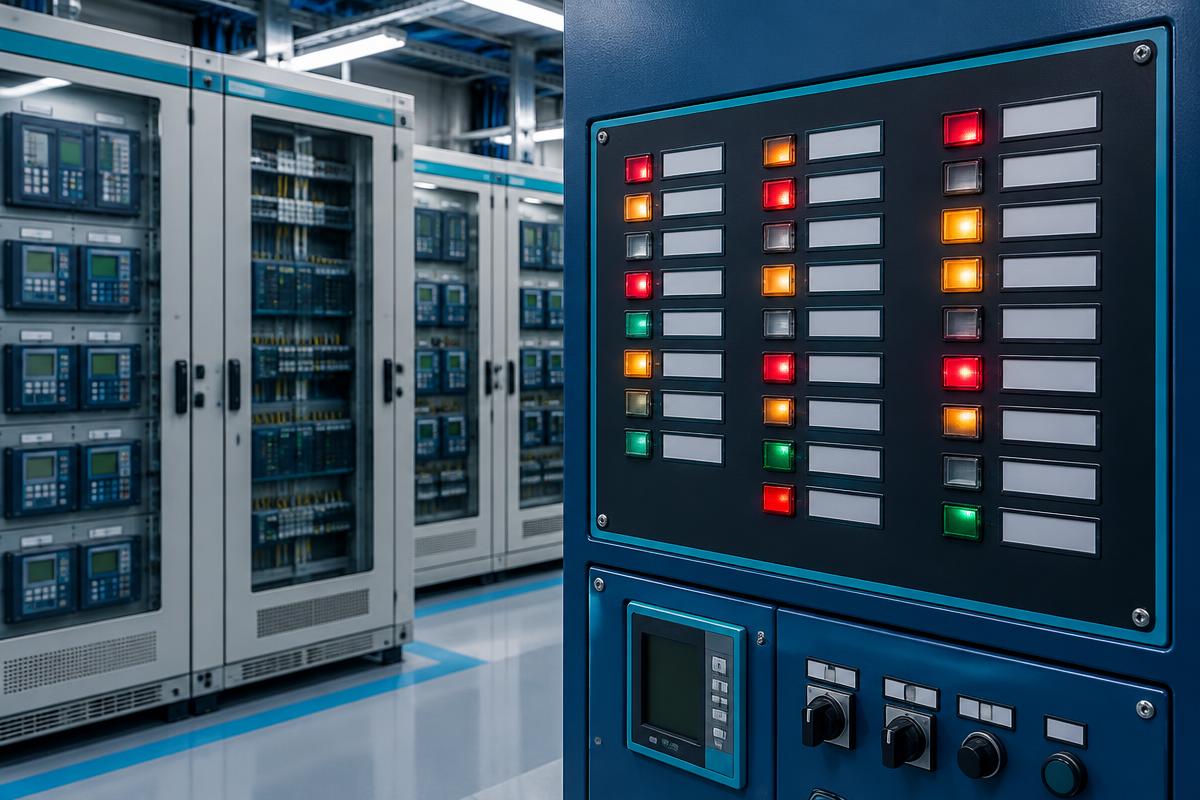
Alarm annunciators in high-voltage substations convert equipment warning signals into recognizable visual and audible indications for operators. This article explains their main applications, operating logic, selection criteria, and testing considerations.
The Role of Alarm Annunciators in Substations
High-voltage substations require timely indication of abnormal equipment conditions. An alarm annunciator receives signals from protective relays, auxiliary contacts, and monitoring devices, converting them into visual and audible warnings. It supports operator response but does not replace protection or fault-clearing functions.
Main Applications
Power Transformer Monitoring
Typical signals include high oil or winding temperature, low oil level, cooling failure, and Buchholz relay alarms. Alarm and trip stages must remain distinct according to the approved protection scheme.
Circuit Breakers and Auxiliary Systems
- Low gas pressure or operating-mechanism pressure
- Spring-charging failure and trip-circuit supervision alarms
- Charger failure and abnormal DC bus voltage
- Insulation-monitoring, ventilation, or fire-system warnings
These conditions generally require dedicated detection devices. The annunciator receives their outputs rather than directly measuring every monitored quantity.
Alarm Sequences and Operator Actions
A common sequence starts with a flashing window and audible alarm. Acknowledgment typically silences the sounder, while the indication remains until the condition clears. Reset behavior depends on the selected sequence and device capabilities.
Acknowledgment does not mean the fault has been corrected. First-out indication, transient-alarm memory, and input delays should only be specified where supported by the selected model.
Selection Criteria
- Electrical compatibility: Verify supply voltage, input type, and contact-interface requirements.
- Capacity: Check input and window counts, alarm grouping, and spare capacity.
- Controls: Confirm sounder ratings, common alarm outputs, and test, acknowledge, and reset functions.
- Installation: Review panel dimensions, environmental limits, insulation, and electromagnetic compatibility requirements.
Commissioning and Control-System Integration
Safely simulate each input to verify terminal assignments, window labels, and operating sequences. A lamp test alone does not validate the complete signal path. Test sounder operation, power restoration, and persistent-alarm behavior.
Local annunciation can complement SCADA. Integration requires supported outputs or communication interfaces; connectivity must not be assumed.
Choosing a Rizmouj Electric Toos Product
The Mashhad-based manufacturer's range includes AMA500, AMA508, AMA510, the 20-input AMA520, smart AMA524, and 35-window AMA-535. Match project requirements against the relevant datasheet before selection. A model name alone does not establish communication features or suitability for every substation specification.