What Is a Serial-to-Ethernet Converter? Applications in Industrial Automation and Substations
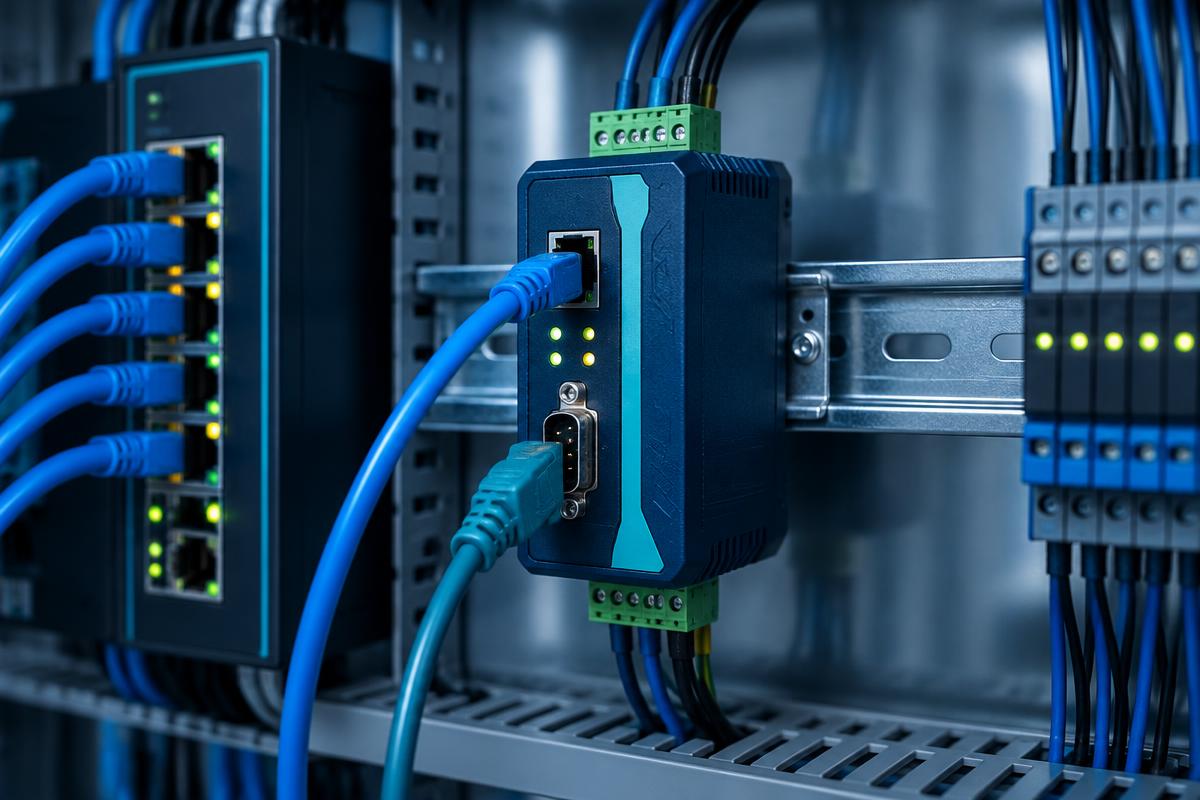
A serial-to-Ethernet converter connects legacy RS-485/RS-232 devices to modern Ethernet networks. Read about its applications, protocols, and selection tips.
What Is a Serial-to-Ethernet Converter?
Many industrial devices — protective relays, energy meters, PLCs — communicate over RS-232 or RS-485 serial ports, while modern SCADA systems run on Ethernet and TCP/IP. A serial-to-Ethernet converter (also called a serial device server or data concentrator) bridges these two worlds.
Applications in Substations
- Connecting serial relays to the substation SCADA system
- Aggregating data from multiple serial devices onto one Ethernet link
- Remote meter reading and monitoring
- Automating existing substations without replacing installed equipment
Key Protocols
A good converter should support industrial protocols such as Modbus RTU/TCP, IEC 61850, and DNP3, so data is translated without changes to the SCADA software. Multiple serial and Ethernet ports greatly increase flexibility.
Converter vs. Data Concentrator
A simple converter maps one serial port to one TCP socket, while a data concentrator aggregates, manages, and forwards data from many devices using different protocols — a smart choice for substation automation projects. Rizmooj Electric Toos provides communication and data concentration solutions alongside its protection equipment.