
Differences Between Test Blocks, Test Switches, and Semaphore Indicators in Substation Panels
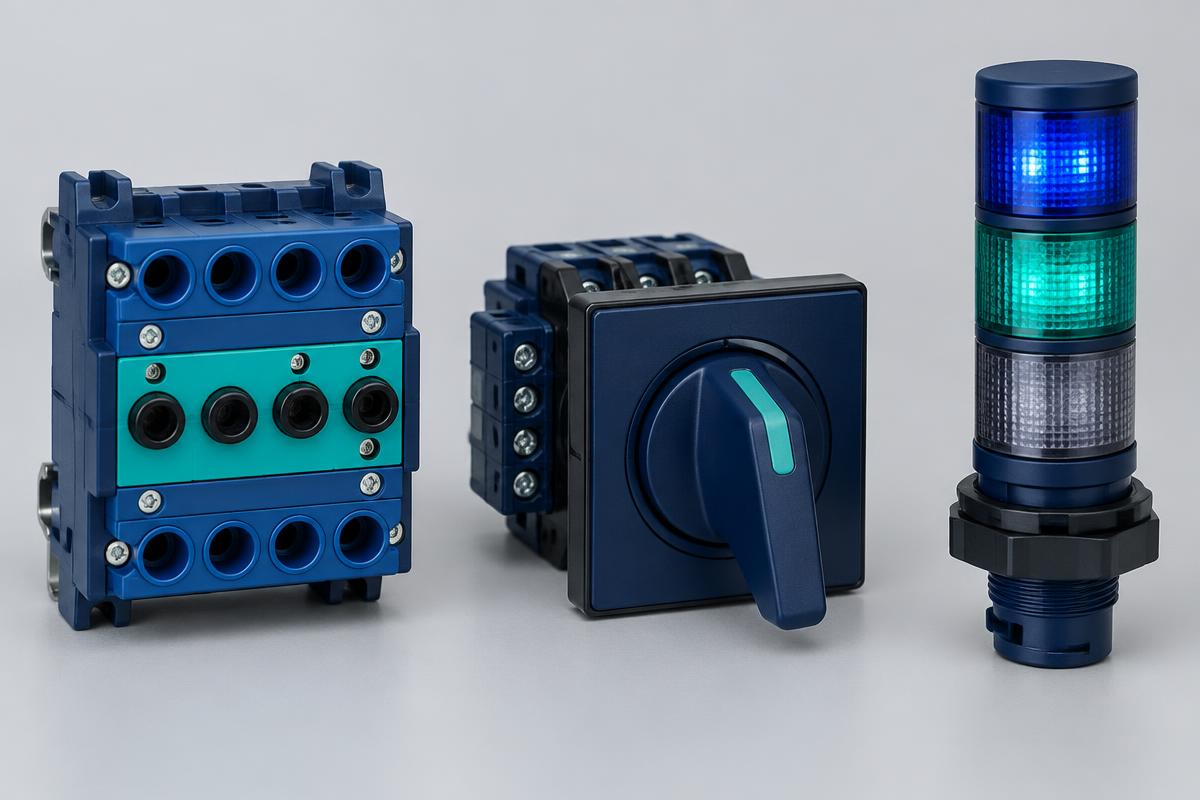
Test blocks, test switches, and semaphore indicators are three common substation panel components often confused with each other. This article explains the differences, applications, and selection of each.
Three Components, Three Different Jobs
Substation protection and control panels contain three small but vital components whose names are often confused: the test block, the test switch, and the semaphore indicator.
Test Block and Test Switch
Test blocks and test switches belong to the same family: both place protection circuits into test or service mode. Classic test blocks (such as Siemens models) work with test plugs, while test switches use a rotary handle mechanism. Both must short the CT secondary before opening the circuit, preventing dangerous open-circuit CT conditions.
What Is a Semaphore Indicator?
A semaphore indicator shows position — it is not a switch. It displays the open/closed status of power equipment such as sectionalizers and disconnectors so operators can read equipment status from a distance. Modern LED semaphores with colored indicators and waterproof housings have replaced old mechanical models.
Rizmooj Products
Rizmooj Electric Toos manufactures both families: the CXV75 and 2RLMG test switches for protection circuits, and LED semaphores such as the CPS-501LE (square) and EPC-501LE (circular) for sectionalizer and disconnector position indication.