
Power Quality Monitoring: The Key to Fewer Equipment Failures in Industrial Networks
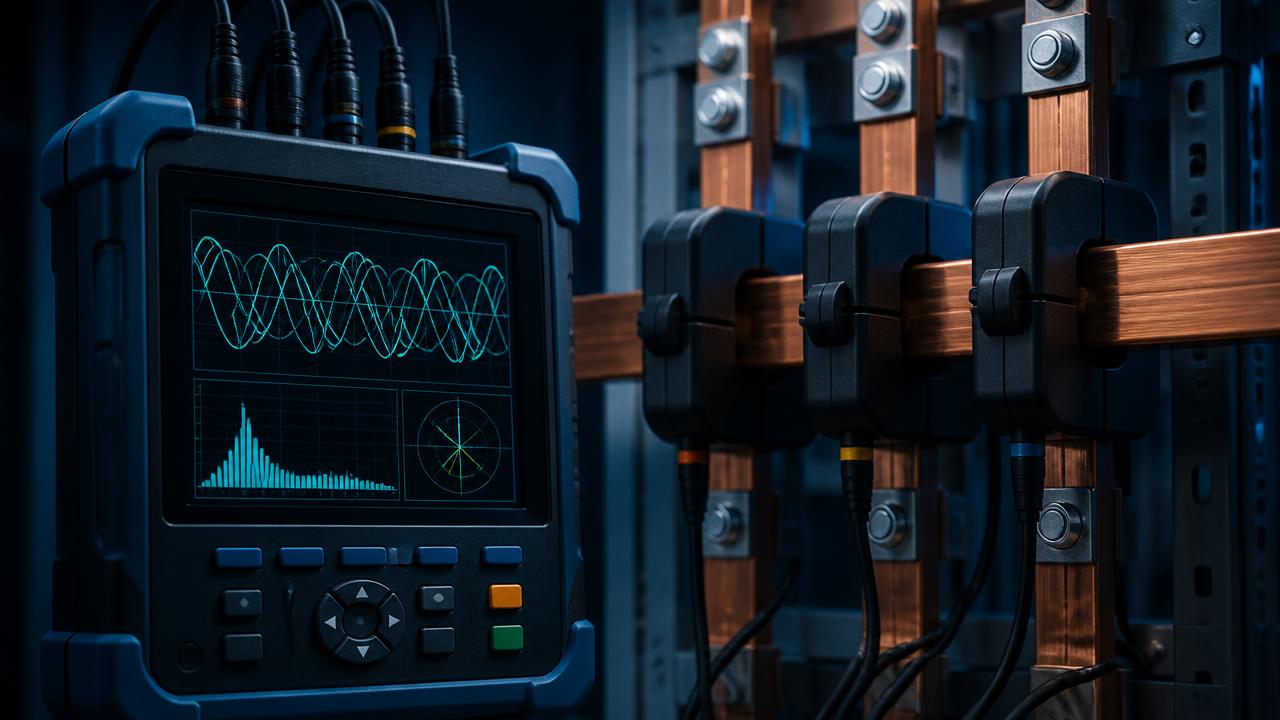
Voltage fluctuation, harmonics and load asymmetry are leading causes of industrial equipment failure. Power quality monitoring reveals them before damage occurs.
What power quality means
Power quality describes how close the voltage and current waveforms of a network are to their ideal shape. The further the network deviates, the sooner sensitive equipment fails. In industrial networks the main causes are voltage fluctuation and sag, harmonics produced by drives and switching supplies, load asymmetry between the three phases, and a low power factor.
Warning signs you should not ignore
- Abnormal heating of motors and transformers
- Frequent and unexplained tripping of protective devices
- Repeated faults in control equipment and PLCs
- Rising electricity bills without higher production
- Unusual vibration and noise in rotating equipment
The role of measuring devices
Measurement and monitoring devices display current, voltage, power and network deviations in real time. Recording this data reveals fault patterns, for example that voltage sag always coincides with the start of a large motor, or that asymmetry comes from poorly distributed single-phase loads.
From monitoring to corrective action
Once the problem is identified, corrective action may involve rebalancing loads across phases, adding power factor correction, using soft starters for large motors, or tuning the protection relay settings more precisely. Without measurement, every action is an expensive guess.
How Rizmoj Electric Toos can help
We supply locally manufactured protection, control and measurement equipment together with technical consultation. If your plant suffers from repeated equipment failures or unplanned stoppages, our engineers can help you choose the right monitoring device and set protection correctly.